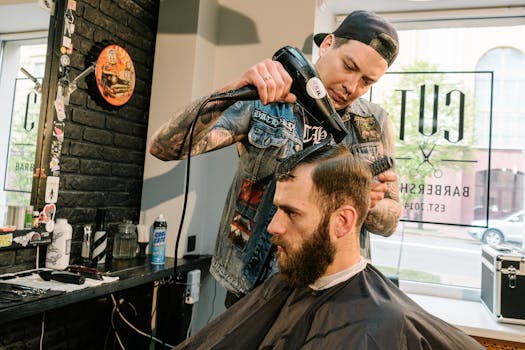
Beard Grooming Protocol: The Complete Guide to a Jawline That Mogs

Most guys with beards are walking around looking like they just stopped shaving and called it a day. That's not a beard. That's neglect with a brand. A properly groomed beard is one of the most powerful looksmaxxing tools you have. It carves your jawline, adds perceived masculinity, and signals that you're someone who pays attention to detail. An unkempt beard does the exact opposite. It screams "I gave up" in a way that clean-shaven never would.
Here's the reality: your beard is not a set-it-and-forget-it accessory. It's a living thing on your face that requires maintenance every single day. The guys who look like they woke up with a perfect beard didn't. They spent 10 minutes on it that morning, just like they do every morning. The difference between a beard that mogs and a beard that cope is about 10 minutes of daily effort. That's it. Not complicated. Just consistent.
The Three Tools You Actually Need
Forget the 12-piece grooming kits. You need three things: a quality trimmer with adjustable guards, a boar bristle brush, and beard oil. That's it. The trimmer controls length. The brush trains direction and distributes oil. The oil moisturizes the skin underneath and gives the hair a healthy sheen. Everything else in the grooming aisle is designed to separate you from your money, not improve your beard.
Your trimmer should have guards from 1mm to 10mm at minimum. You're not using it to sculpt a topiary. You're using it to maintain consistent length across your face. The number one mistake guys make is letting the cheek area grow wild while the neck area gets patchy. A uniform length across the entire beard creates the illusion of fullness. Inconsistent length creates the illusion of patchiness. Same beard. Different perception. Trim it down to the same guard everywhere and you'll look 30% fuller overnight.
The Neck Line and Cheek Line: Where Beards Go to Die
The neck line is the single most important decision you make with your beard. Too high and you look like you have a chin strap. Too low and you look like your beard is trying to eat your chest. The correct neck line is where the underside of your jaw meets your neck. Place two fingers above your Adam's apple and draw a curve from there to behind your ears. That's your neck line. Anything below it goes. Every time. No exceptions.
The cheek line is simpler but just as critical. Your natural cheek line is probably fine. Don't carve it into a perfect line unless you want to look like you work at a tech startup in 2015. Just clean up the strays — the random hairs that grow above the natural line — and let the rest do its thing. If your cheek line is naturally uneven, trim it to the lowest point. Never raise it. A high cheek line makes your face look rounder. A lower, natural cheek line makes your face look longer and more angular. You want angular. Angular mogs.
The mustache connection is where most guys go wrong. Let your mustache connect naturally to your beard. Don't shave a gap between your mustache and your cheek hair. That gap doesn't make you look clean. It makes your face look divided. The continuous hair from mustache through cheek to jaw creates one unbroken line that visually widens your lower third. That's the entire point of a beard for facial structure optimization.
The Daily Protocol: 10 Minutes to a Beard That Commands Respect
Morning: wash your face with warm water. Not hot. Hot water strips oils. You're cleaning, not degreasing a pan. Pat dry with a towel — don't rub. Apply 3-4 drops of beard oil to your palms, rub them together, and work it into the skin underneath your beard first, then through the hair. This is crucial. Most guys apply oil to the hair surface and the skin underneath stays dry and flaky. The oil goes skin first, then hair.
Brush with the boar bristle brush in the direction you want the beard to lay. Downward on the cheeks, downward on the chin. This trains the hair over time. A beard that lays flat looks thicker than one that sticks out in every direction. Training takes about two weeks of consistent brushing. After that, it holds shape on its own.
Check your neck line and cheek line every three days. You don't need to trim the full beard that often, but the edges need maintenance. One stray neck hair can make your entire beard look unkempt. Use the trimmer without a guard to clean the neck line. Use scissors for the cheek strays. Scissors give you more control than a trimmer for detail work.