Overhead Press is the Only Vertical Push You Need in 2026
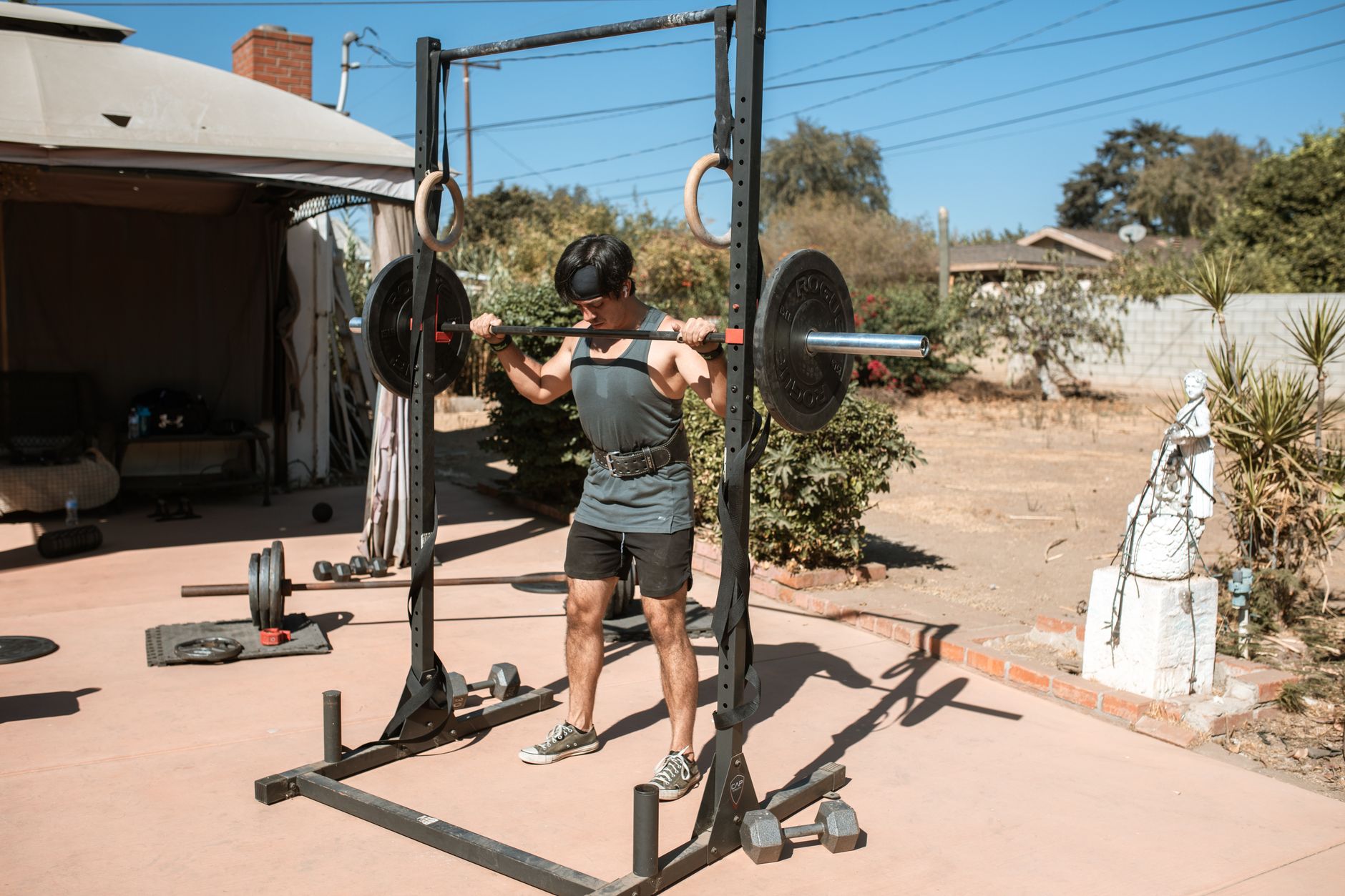
Most guys waste their vertical push day on bench press variations. Cope. The overhead press is the single most effective movement for building upper body strength and aesthetics. If you're not strict pressing, you're leaving gains on the table—and your delts, triceps, and core are paying the price.
The gym bros have it backwards. They think horizontal pushing (bench) is king while treating overhead press as an afterthought. This is why their shoulders look soft and their pressing strength lags. Real gymmaxxing prioritizes the movement that builds the most functional, visible, and transferable strength. Strict overhead press isn't just an exercise—it's the foundation.
The Overhead Press Protocol: 3x5 for Life
Here's the actual protocol that works: 3 sets of 5 reps, 2-3 times per week. Start with a weight you can handle with perfect form. Add 2.5 lbs every session until you stall. When you stall, work up to 5 sets of 3 with the stalled weight, then add load again. This is linear progression—the fastest way to gain strength.
Form is non-negotiable: bar starts at clavicle, press straight up, lockout fully, keep elbows in front of the bar throughout the descent. No arching, no knee drive, no half reps. Your torso should be rigid—brace like you're about to get punched. If you can't maintain tension, the weight's too heavy. This isn't cope for perfect genetics—it's physics.
Common Mistakes That Are Sabotaging Your Press
The biggest error? Overarching your lower back. This turns the strict press into a standing incline bench and removes core engagement. The fix: tighten your glutes and abs throughout the entire movement. If you need to arch to complete the rep, the weight's too heavy or your shoulder mobility is trash—fix that first.
Second mistake: partial reps. Lockout is where the movement actually builds strength. If you're cutting the top 2 inches, you're building a weak lockout—which means you'll never lift heavy weight. Full range only. Third mistake: pressing in front of a mirror and judging your form by how the bar path looks. Record yourself from the side—you'll see bar path deviations you can't see head-on.
Your warm-up matters more than the working sets. Do 10-15 minutes of shoulder mobility work before you touch a bar. Band pull-aparts, dislocates, scapular push-ups, and thoracic rotations. Cold overhead pressing is a one-way ticket to shoulder impingement. The strong guys warm up—the injured guys skip this and wonder why they're always hurt.
When to Actually Bench (Rarely)
The bench press isn't useless—it's just secondary. If you're pressing 3-4 times per week, add bench once weekly with a focus on technique and hypertrophy work. But if you're time-constrained and can only do two push days per week, make one of them overhead press focused and skip bench entirely. Your shoulders will thank you.
Bench has its place for chest development and powerlifting competition, but for the average gymmaxxer? Overhead press builds more functional strength that translates to real-world pushing. Want to put something heavy overhead? You need press strength. Want to push a car? That's press strength. Want to handstand? That's press strength. Bench is niche—press is fundamental.
Accessory Work That Actually Matters
accessories: lateral raises for delt cap, skull crushers for triceps mass, and face pulls for rear delt health. That's it. Everything else is filler. Do these after your main press work, 3 sets of 10-15 each. Don't overcomplicate—these three movements address the weak points in your pressing chain.
Lateral raises build the "capped" delt look that separates gymmaxxers from normies. Skull crushers build triceps mass that fills out your sleeves. Face pulls prevent internal rotation and shoulder injuries caused from all that pressing. Rotate these weekly—sometimes 2x10 heavy, sometimes 3x15 light. Keep the joints healthy while you build strength.
The Genetic Ceiling Myth
Guys use "genetic ceiling" as an excuse for weak pressing. This is cope. Overhead press works for every body type—long arms make it harder but the strength gains still come. Short arms make it easier—capitalize. There's no body type that can't build a strong press with consistent effort. The only actual ceiling is your consistency and recovery.
Progress markers beyond the bar: your handstand hold improves, your handstand push-up progress accelerates, your shoulder stability increases. The press carries over to everything upper body. Bench press improvements don't transfer to overhead strength—press improvements transfer to both. This is the efficiency advantage.
Start pressing today. Not tomorrow—today. The gymmaxxing path is littered with guys who "meant to" start overhead press but never got around to it. Meanwhile, the guys who actually press are moving serious weight and building shoulders that look like boulders. Which guy are you?