Sleepmaxxing Blackout Protocol: Why Darkness Is the Missing Variable in Your Recovery
You bought the magnesium. You cut blue light at 9pm. You even splurged on the fancy pillow. But you're still waking up groggy, still crashing at 2pm, still feeling like your sleep isn't actually recovering you. Here's why: your room isn't dark enough. Not even close. Most guys think "lights off" means total darkness. It doesn't. The LED on your TV, the glow from your smoke detector, the streetlight bleeding through your blinds — all of it is destroying your melatonin production and fragmenting your sleep architecture without you ever waking up enough to notice.
This isn't a minor optimization. This is a fundamental. Light exposure during sleep suppresses melatonin by up to 50% at intensities as low as 5 lux — that's dimmer than a nightlight. Your body evolved to sleep in caves, not in rooms that glow like a Christmas tree. If you're not sleeping in total darkness, you're leaving recovery on the table every single night.
The Science: Why Light Destroys Sleep Quality
Your suprachiasmatic nucleus — the master clock in your brain — is exquisitely sensitive to light. Even through closed eyelids, photons hit your retina and signal "daytime" to your circadian system. The result? Your brain suppresses melatonin, shifts you out of deep sleep, and fragments your REM cycles. You might not fully wake up, but your sleep architecture gets shredded. Deep sleep drops. REM gets interrupted. Growth hormone secretion — which peaks during the first deep sleep cycle — gets blunted. That's not a minor inconvenience. That's a recovery catastrophe.
Researchers have shown that even a single night of ambient light exposure during sleep reduces insulin sensitivity the next morning by up to 15%. That means worse nutrient partitioning, more fat storage, and worse gym performance — all from a glow you didn't even know was there. If you're grinding in the gym and sleeping in a room that isn't pitch black, you're building on a broken foundation.
The Blackout Protocol: Step by Step
Step 1: Kill every light source in your bedroom. Walk into your room at midnight, close the door, and wait 5 minutes for your eyes to adjust. Now look around. Every single point of light you see is a problem. The router LED. The TV standby light. The charging indicator on your phone. The smoke detector. The power strip. Cover them all with black electrical tape. Not colored tape — black. Double-layer it if you can still see a glow. This takes 15 minutes and it might be the single highest-ROI sleep hack you ever implement.
Step 2: Blackout your windows properly. Curtains are not enough. Even "blackout curtains" let light bleed around the edges. You need either a dual-layer system — blackout curtains over blackout shades — or proper window blackout panels that mount directly to the frame. The cheap option: cut black foam board to fit inside your window frame and press it in. Total blackout for $10. The premium option: motorized blackout shades with side channels that seal to the wall. Either way, when you close your eyes during the day and wave your hand in front of your face, you should see nothing. Zero photons. That's the standard.
The Sleep Mask Hierarchy
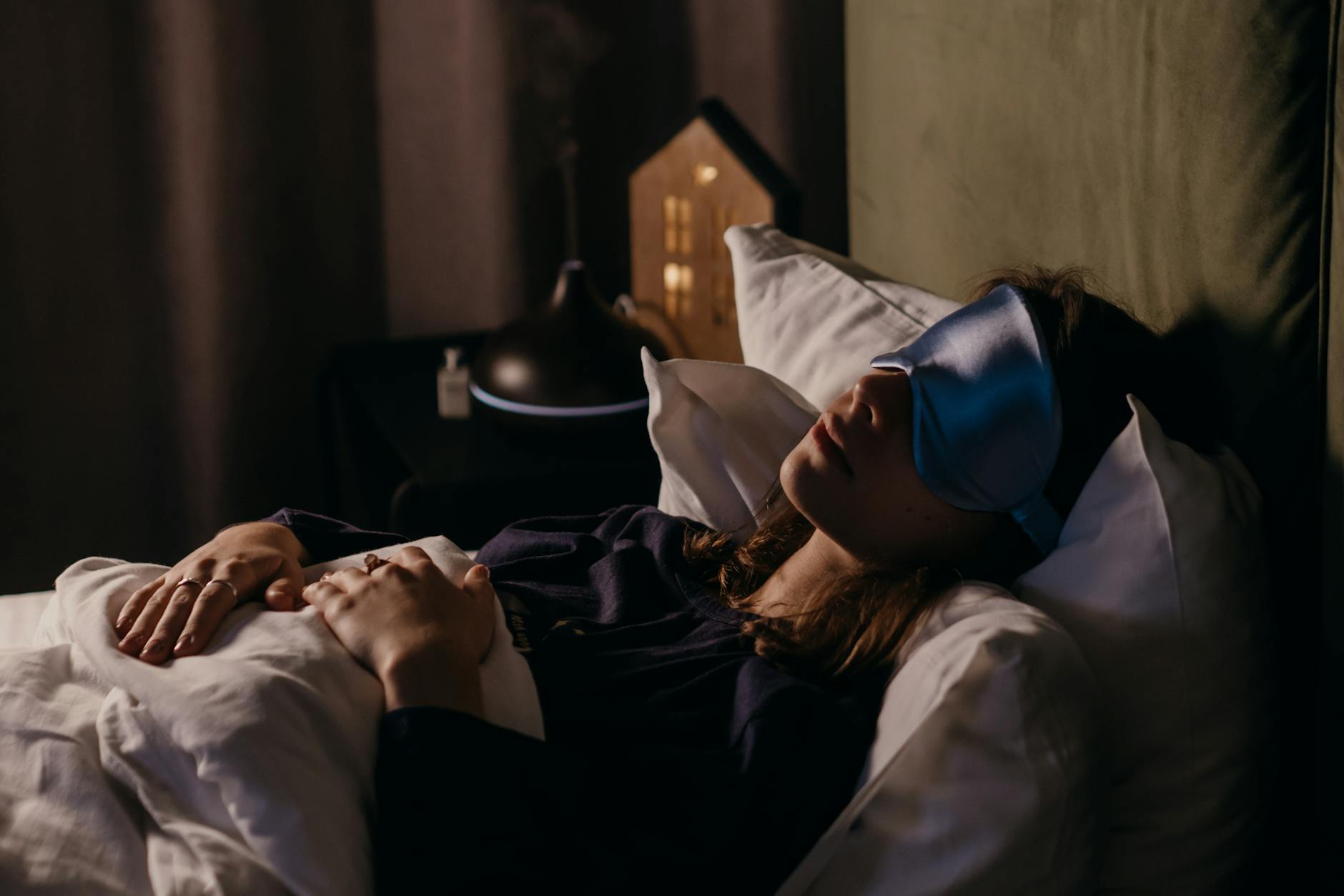
A sleep mask is your backup plan — not your primary strategy. But it matters, especially if you travel or can't fully control your environment. Not all sleep masks are equal. The thin silk mask you got on a red-eye flight? Trash. It lets light in from the bottom and shifts around all night. The flat foam masks are better but still press on your eyelids, which is uncomfortable and can disrupt REM sleep eye movements. The only masks worth running are the 3D contoured ones that cup away from your eyes — zero pressure on the lids, total seal around the edges. Manta Sleep and similar brands make these. Spend the $30 and never look back.
Here's the hierarchy: total room blackout is S-tier. Room blackout plus sleep mask is S-tier insurance. Sleep mask alone in a lit room is B-tier — you're still getting light leakage from the edges. No blackout and no mask is F-tier and you should be embarrassed. You're literally choosing to recover worse. For what? So your router can blink at you?
The last variable most guys ignore: door gap light. That thin strip of light under your bedroom door from the hallway is enough to suppress melatonin. A $3 door draft stopper eliminates it. Slide it under the door before bed and you've closed the last photon leak in your sleep environment.
What Happens When You Actually Go Dark
Within 3-5 nights of true blackout sleep, most guys report the same things: they fall asleep faster, they wake up fewer times during the night, and they feel actually rested in the morning instead of needing 30 minutes to feel human. That's not placebo — it's your circadian system finally operating without interference. Deep sleep duration increases by 15-20%. Growth hormone peaks are higher and more sustained. Morning cortisol rises more sharply, which means you actually feel awake instead of groggy. Your gym performance improves because your recovery isn't being sabotaged by a blinking LED.
Stop coping with "almost dark." Almost dark is almost recovered. Go full blackout, track your sleep for a week, and watch your numbers climb. The difference between sleeping in a room with 2 lux of ambient light and zero lux is the difference between recovering and just resting. One makes you better. The other wastes your time in bed.